The One Fluid Under Your Hood That's Quietly Getting More Dangerous Every Year
The One Fluid Under Your Hood That's Quietly Getting More Dangerous Every Year
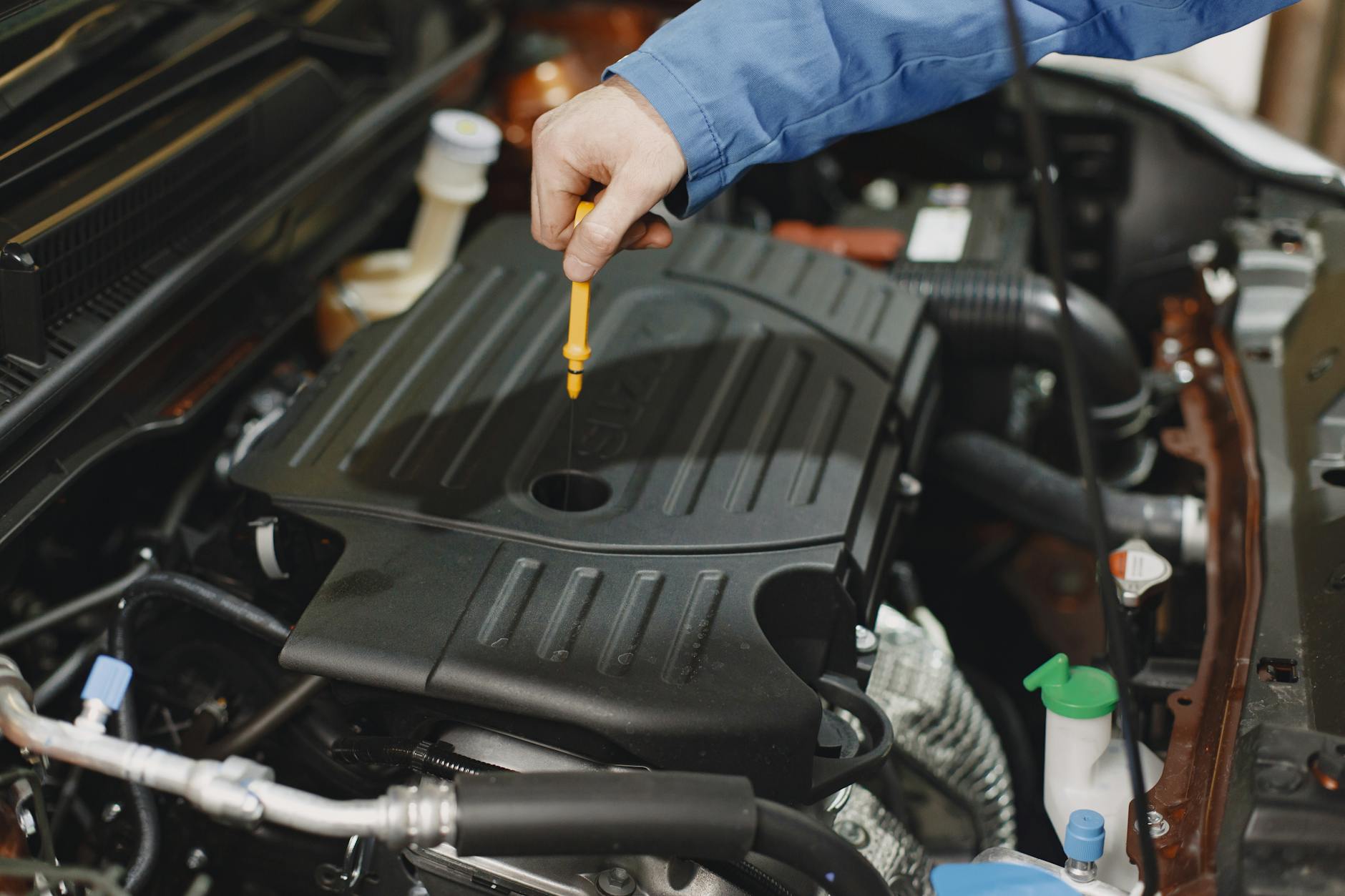
There's a small reservoir under your hood that most drivers have looked at maybe twice in their lives — once when a mechanic pointed at it, and once when the warning light came on. It's the brake fluid reservoir, and what's happening inside it right now is more interesting, and potentially more consequential, than almost anything else going on in your engine bay.
Brake fluid doesn't just sit there doing nothing between service intervals. It's actively changing. And not in a good way.
The Science of a Fluid That Drinks Water
Brake fluid is hygroscopic — a chemistry term that means it naturally absorbs moisture from the surrounding environment. This isn't a manufacturing defect or a sign of poor quality. It's an inherent property of the glycol-ether compounds that make up most conventional brake fluids (DOT 3, DOT 4, and DOT 5.1 are all hygroscopic to varying degrees).
The absorption happens slowly and continuously. Moisture migrates through rubber brake hoses, seeps past seals, and gradually works its way into the fluid throughout your braking system. You can't see it. You can't smell it. The fluid in your reservoir will look perfectly fine to the naked eye even when it's significantly contaminated.
Here's why that matters: water dramatically lowers brake fluid's boiling point.
Fresh DOT 4 fluid, straight out of the bottle, has a dry boiling point around 446°F. After absorbing just 3–4% water by volume — which can happen within two to three years of normal driving — that boiling point can drop to around 311°F. That's a reduction of over 130 degrees, and it happens silently, invisibly, while your car sits in the driveway.
What Happens When Brake Fluid Boils
Braking generates heat. That's the whole mechanism — kinetic energy converted to thermal energy through friction at the rotors. Under normal commuting conditions, your brakes shed that heat fast enough that fluid temperatures stay manageable.
But push the system harder — a long mountain descent, repeated hard stops in stop-and-go freeway traffic, or an emergency braking situation — and temperatures spike quickly. If your fluid's boiling point has been quietly degrading for the past three years, you may reach that threshold faster than you'd expect.
When brake fluid boils, it vaporizes. And unlike liquid, vapor is compressible. Press the brake pedal and instead of firm hydraulic resistance transmitting force to your calipers, you get a spongy, sinking feeling as the pedal travels further and further toward the floor. Mechanics call this brake fade. In serious cases, it's called a loss of braking.
This is not a theoretical concern. It's the documented cause of accidents on mountain roads and in track day incidents across the country every year. The drivers involved often had no idea their fluid was compromised.
Why the Service Intervals on Your Sticker Aren't Telling You the Full Story
Here's where things get a little uncomfortable from a consumer standpoint.
Many manufacturer-recommended service intervals for brake fluid sit at two years or 30,000 miles — and some manufacturers don't specify a change interval at all, leaving it to dealer discretion. Independent mechanics and brake system engineers frequently describe these intervals as conservative at best and dangerously optimistic at worst, particularly for drivers in humid climates (think the Southeast, the Pacific Northwest, anywhere with significant seasonal weather variation) or those who drive in mountainous terrain.
The reason manufacturers hedge on this is partly liability, partly the challenge of accounting for wildly different driving conditions across a national market. A retired couple in Phoenix who drives 8,000 gentle miles a year is a completely different case from a commuter in Atlanta who hits the brakes 200 times a day in traffic. The same interval recommendation can't serve both accurately.
The practical upshot: your brake fluid's actual condition has almost nothing to do with the mileage on your odometer and a lot to do with where you live, how you drive, and when it was last changed.
The $10 Fix That Most Drivers Don't Know Exists
This is the part that's genuinely surprising, even to people who consider themselves reasonably car-savvy.
You can test your brake fluid's moisture content at home, right now, in about 30 seconds, with brake fluid test strips that cost roughly $10 for a pack of several tests. The strips work like a pH test — dip one into your reservoir, wait a few seconds, and compare the color change to a chart that tells you whether your fluid is in good shape, borderline, or needs immediate replacement.
These strips have been available for years. They're stocked at AutoZone, O'Reilly, and Amazon. Professional technicians use more sophisticated electronic testers, but the strip method is accurate enough to tell you whether you have a problem worth addressing.
Most drivers have never heard of them. They're not prominently marketed. They're not part of the standard checklist most quick-lube shops run through. They just quietly exist, doing a job that could genuinely prevent a dangerous situation, waiting for someone to discover them.
A Simple Habit Worth Building
The fix itself — actually replacing brake fluid — is one of the cheaper maintenance items on any service menu, typically running $70 to $150 at an independent shop depending on your vehicle. It's not a complex job. The barrier isn't cost or complexity.
The barrier is awareness. Most drivers simply don't know this is something that degrades, that the degradation has real consequences, or that a simple test exists to check it.
So here's the practical takeaway: if you can't remember the last time your brake fluid was changed, buy a $10 test strip this week. Dip it in the reservoir. See what it tells you.
There are very few moments in car ownership where ten dollars and thirty seconds can provide that kind of peace of mind — especially on the long downhill stretches where you'd really rather not find out the hard way.