The Jet Whisperers: How Backyard Mechanics Made Carburetors Sing
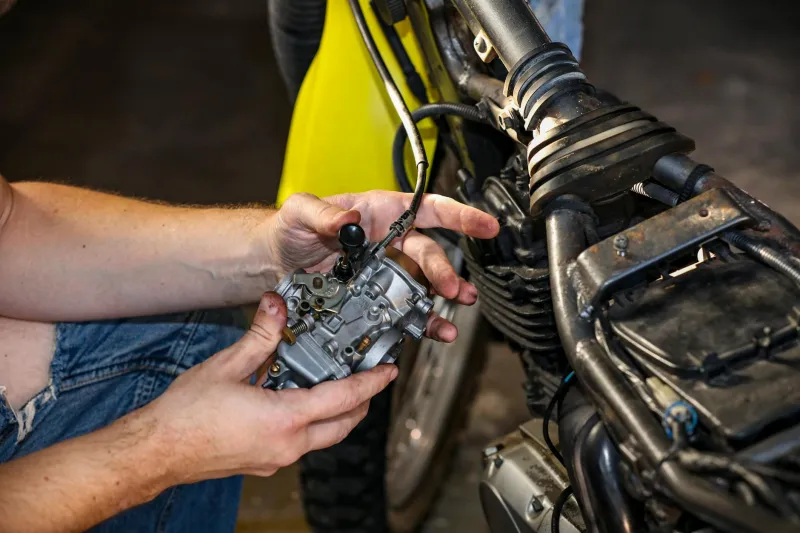
When Engines Had Souls You Could Touch
There was a time when opening a car's hood revealed something you could actually understand and fix with your hands. No diagnostic computers, no sealed black boxes — just mechanical components you could see, adjust, and tune. At the heart of it all sat the carburetor, a device that mixed air and fuel through pure mechanical wizardry.
For decades, backyard mechanics developed an almost supernatural ability to make these carburetors perform beyond their factory specifications. They passed down techniques through generations, creating a folk knowledge that could transform a sluggish engine into something that surprised everyone — including its owner.
The Lost Language of Jets and Needles
Walk into any auto parts store in the 1970s, and you'd find walls of tiny brass jets, metering rods, and needle valves. To most people, these looked like random hardware. To carburetor tuners, they were the alphabet of engine performance.
"Each jet size changed how the engine breathed," recalls Tommy Martinez, who spent thirty years building race engines in his Tucson garage. "A bigger main jet richened the high-speed mixture, but go too big and you'd flood it. Too small, and it'd run lean and hot. Finding that sweet spot was like tuning a piano."
 Photo: Tommy Martinez, via media.distractify.com
The process required patience and an almost musical ear. Experienced mechanics could diagnose carburetor problems just by listening to an engine idle. A slight stumble at acceleration meant the accelerator pump needed adjustment. A rough idle pointed to air leaks or incorrect mixture screws.
The Screwdriver Symphony
The most fundamental carburetor trick involved two small screws most drivers never noticed: the idle mixture screws. These controlled how much fuel mixed with air when the engine was idling, and adjusting them properly could transform how a car ran.
The technique seemed simple but required a trained ear. Start the engine, turn each screw slowly until the idle got rough, then back it out until the engine smoothed out. Repeat on the other screw. But master mechanics knew dozens of variations on this basic theme.
"You'd adjust them while watching the vacuum gauge, listening to the exhaust note, even feeling the vibration through the steering wheel," explains former mechanic Rita Johnson, who learned the trade from her father in rural Montana. "Every engine had its own personality. A 350 Chevy wanted different settings than a 302 Ford, even with identical carburetors."
 Photo: Rita Johnson, via media.baselineresearch.com
The Float Dance
Inside every carburetor sat a brass float that controlled fuel level like a toilet tank float controls water. But unlike toilet tanks, carburetor floats required precise adjustment measured in fractions of inches.
Backyard mechanics developed elaborate rituals for setting float levels. Some used special gauges, others relied on visual tricks like looking through the sight plug while the engine ran. The most experienced could adjust float level by sound alone — they knew exactly how the fuel should gurgle when the level was perfect.
"Get the float wrong, and nothing else mattered," notes classic car restorer Mike Chen. "Too high, and you'd flood the engine or get black smoke. Too low, and it'd starve for fuel on hills or hard turns. But get it just right, and suddenly the whole carburetor came alive."
The Venturi Vacuum Wizards
The most sophisticated carburetor tuners understood something most people never learned: how air velocity through the venturi created the vacuum that drew fuel from the jets. This knowledge let them predict how changes in air filter, exhaust system, or even altitude would affect carburetor performance.
They'd modify air horns, reshape venturi openings, and even drill tiny holes in strategic places to change airflow patterns. These modifications were invisible to casual observers but could add noticeable power and improve fuel economy.
"I had customers drive three hours just for a carburetor tune," remembers Denver mechanic Frank Rodriguez. "Word got around that I could make their truck run better than when it was new. Half the time, all I did was really understand how the carburetor was supposed to work."
 Photo: Frank Rodriguez, via socalextremismwatch.com
Why the Knowledge Vanished
When fuel injection systems became standard in the 1980s, this entire body of knowledge became obsolete almost overnight. Computer-controlled fuel systems eliminated the need for manual adjustment, but they also eliminated the possibility of it.
"You can't tune fuel injection with a screwdriver," observes automotive historian David Park. "The computer makes thousands of adjustments per second based on sensor inputs. It's more precise than any human could ever be, but it also removed the human element entirely."
The transition happened so quickly that many experienced carburetor tuners never learned computer diagnostics. Their skills, developed over decades, suddenly had no application in modern vehicles.
The Underground Revival
Today, carburetor knowledge survives mainly in three communities: classic car restorers, vintage motorcycle enthusiasts, and a small group of hot rod builders who prefer mechanical simplicity over electronic complexity.
"Young guys think I'm some kind of magician when I can make their '69 Camaro run right," laughs Martinez, now in his seventies. "But it's not magic. It's just understanding how things actually work instead of letting a computer do it for you."
These modern practitioners often combine old-school carburetor knowledge with new tools. They use digital air-fuel ratio meters to verify what their ears tell them, and precision measurement tools to achieve adjustments that would have been guesswork forty years ago.
The Lesson in the Lost Art
The disappearance of carburetor tuning represents something larger than just automotive technology. It marks the transition from mechanical systems you could understand and modify to electronic systems that work better but remain mysterious.
Modern fuel injection is undeniably superior — more efficient, cleaner, and more reliable than any carburetor ever built. But something was lost in that transition: the satisfaction of understanding exactly how your engine worked and being able to make it work better with your own hands.
For a generation of mechanics, the carburetor wasn't just a component — it was a puzzle to be solved, an instrument to be tuned, and a connection between human skill and mechanical performance. That connection, once broken, has never quite been restored.