The Lost Art of Depression-Era Hypermiling — When a Single Tank Had to Last From Kansas to California
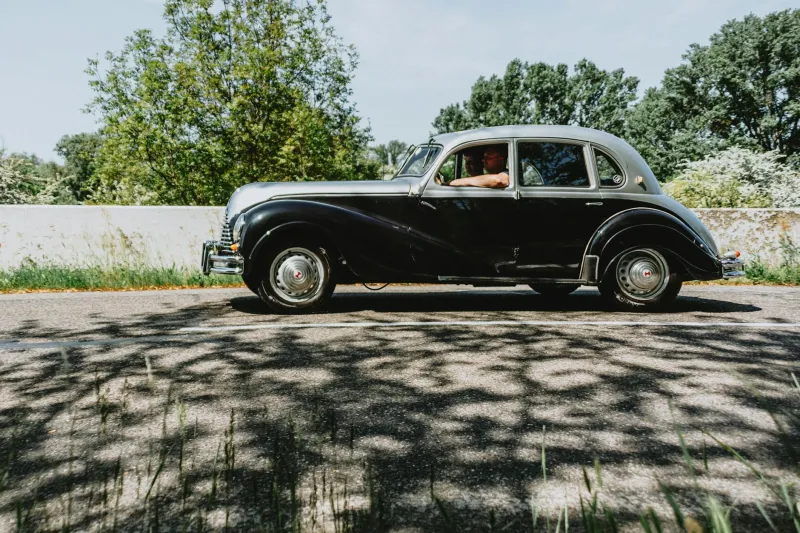
The Desperate Science of Making Every Drop Count
In 1934, the Hartwell family of Topeka, Kansas faced an impossible choice. With John's factory job eliminated and rumors of work in California orchards, they had $23 to their name and a 1929 Ford Model A that guzzled gas like a thirsty horse. The 1,400-mile journey ahead would normally require at least six fill-ups — money they simply didn't have.
What they did have was something modern drivers have largely forgotten: a community knowledge base of fuel-stretching techniques born from pure necessity. These weren't the carefully calculated methods of today's hypermiling enthusiasts with their digital displays and smartphone apps. This was survival driving, passed down through Depression-era communities like precious family recipes.
The Physics of Poverty-Driven Innovation
The Hartwells, like thousands of other families making the desperate migration west, had mastered what they called "ghost driving" — a collection of techniques that could stretch a single tank of gas across multiple states. The core principle was momentum management, but their methods went far deeper than simply coasting downhill.
They'd learned to read the landscape like a book. A slight rise in the road three miles ahead meant building speed gradually while the engine was already working. A long downhill stretch meant shutting off the engine entirely and coasting — sometimes for miles at a time. Modern cars make this dangerous, but the mechanical simplicity of 1930s vehicles allowed drivers to restart engines with a simple clutch pop.
The most crucial skill was "reading the wind." Prairie drivers knew that a strong tailwind could add 50 miles to their range, while a headwind could cut it in half. They'd plan entire routes around weather patterns, sometimes adding hundreds of miles to avoid driving into prevailing winds.
The Community Network of Gas-Stretching Wisdom
What made these techniques truly remarkable wasn't just their effectiveness — it was how they spread. Before radio traffic reports or highway information systems, Depression-era drivers created an informal intelligence network. Gas station attendants would share road conditions with departing customers. Families camping in "Hoovervilles" along major routes would pass along wind patterns and optimal timing for specific stretches of highway.
One technique, called "drafting the rails," involved following freight trains on parallel roads. The massive locomotives would create wind patterns that savvy drivers could exploit, riding the pressure waves like modern cyclists drafting behind vehicles. This required intimate knowledge of railroad schedules and the ability to maintain precise distances — too close meant dangerous debris, too far meant losing the aerodynamic benefit.
The Lost Science of Engine Temperature Management
Perhaps the most sophisticated technique involved managing engine temperature for optimal efficiency. Depression-era drivers discovered that their engines ran most efficiently at specific temperatures — not the hottest safe operating temperature, but a precise sweet spot that varied by engine design and ambient conditions.
They'd partially block radiators with cardboard in winter, or remove thermostats in summer. Some drivers carried multiple fan belts of different tensions, swapping them based on conditions. These modifications required deep mechanical knowledge and constant attention, but could improve fuel economy by 20-30%.
The technique extended to oil viscosity management. Families would carry multiple grades of oil, switching to thinner viscosities for long highway stretches and thicker oils for mountain passes. They understood that engine friction was their enemy, and every reduction in internal resistance meant more miles per gallon.
Why These Methods Vanished — And Why They're Coming Back
The postwar economic boom killed these techniques almost overnight. Cheap gas, reliable cars, and the interstate highway system made efficiency less critical than speed and comfort. The knowledge that had sustained families through their darkest hours became irrelevant curiosities.
But today's hypermiling community is accidentally rediscovering the same principles. Modern apps like Fuelly and techniques promoted by efficiency enthusiasts mirror the Depression-era methods with startling accuracy. The difference is that today's practitioners choose these techniques for environmental or economic reasons, not survival.
Contemporary hypermilers use digital tools to achieve what 1930s drivers accomplished through intuition and desperation. GPS systems now provide the road-reading capabilities that Depression-era drivers developed through experience. Engine management computers offer the precise control that required mechanical modifications eighty years ago.
The Hidden Throttle Connection
What's most fascinating is how these techniques reveal the hidden relationship between driver and machine that modern automation obscures. Depression-era drivers understood their vehicles as partners in an efficiency dance, reading every vibration, sound, and response.
Today's drive-by-wire systems and automatic transmissions have severed that connection for most drivers. But the principles remain valid: momentum is precious, resistance is the enemy, and understanding your machine's sweet spots can unlock remarkable efficiency gains.
The next time you're cruising down a long highway, remember the Hartwells and thousands of families like them. They turned fuel efficiency into an art form not because they wanted to, but because they had to. Their forgotten techniques are still there, hiding in plain sight, waiting for drivers curious enough to rediscover them.