The Emergency Speed Limit That Accidentally Rewired America's Driving DNA
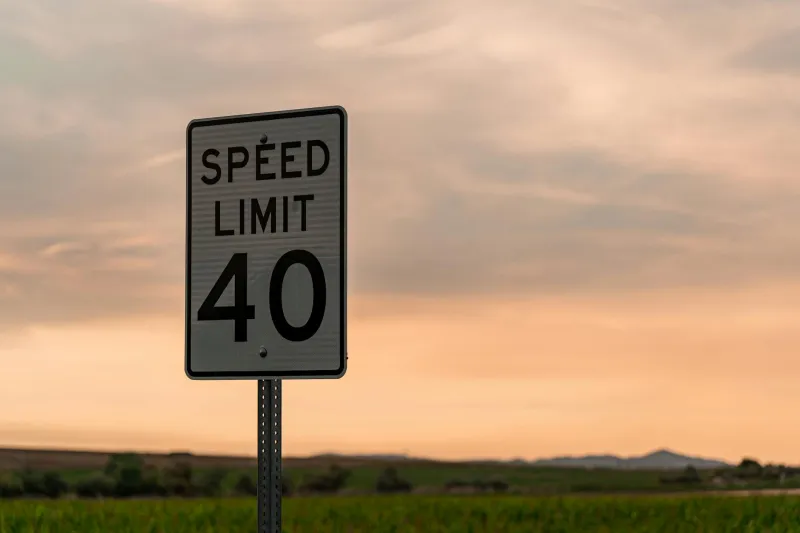
Most people remember the 55 mph speed limit as just another traffic rule. What they don't know is that this single policy accidentally triggered one of the most fascinating cultural experiments in American history — and the underground rebellion that eventually killed it.
The Crisis That Started It All
October 1973. The Arab oil embargo hits, gas prices quadruple overnight, and Americans are waiting in mile-long lines just to fill their tanks. In this chaos, Congress passes the Emergency Highway Energy Conservation Act, mandating a national 55 mph speed limit. The logic seemed bulletproof: slower speeds mean better fuel economy, and better fuel economy means less dependence on foreign oil.
What lawmakers didn't anticipate was that they'd just declared war on American driving culture.
The speed limit wasn't supposed to be permanent. It was emergency legislation, designed to last just long enough to weather the oil crisis. But like many "temporary" government measures, it stuck around far longer than anyone planned — 21 years, to be exact.
The Great American Speed Rebellion
By the late 1970s, something remarkable was happening on America's highways. Truckers, armed with CB radios and a growing sense of frustration, began organizing what amounted to mobile protest convoys. They called it "bear hunting" — using their radios to warn other drivers about police speed traps, effectively creating a nationwide network of speed limit resistance.
The CB radio craze that swept the country wasn't just about novelty. It was the infrastructure of rebellion. Phrases like "Smokey Bear" (state trooper) and "bear in the bushes" (hidden police car) became part of American vernacular because millions of drivers were actively conspiring to break the speed limit.
Truck stops sold radar detectors like they were essential safety equipment. Songs like "Convoy" by C.W. McCall became anthems of highway rebellion. The federal government had accidentally created a nationwide underground movement, and it was broadcasting on Channel 19.
The States Fight Back
Here's where the story gets really interesting: many state governments quietly joined the rebellion.
Montana posted signs reading "Speed Limit 55 — Day, Reasonable and Prudent — Night." During daylight hours, they'd issue $5 "energy waster" tickets that weren't even considered moving violations. Nevada and other western states followed similar strategies, essentially nullifying federal law through creative non-compliance.
The federal government's response was to withhold highway funding from non-compliant states. This created a bizarre standoff where Washington was essentially bribing state governments to enforce an increasingly unpopular law on their own citizens.
The Numbers Game
By the 1980s, studies began revealing uncomfortable truths about the 55 mph limit. Yes, it saved fuel during the initial crisis. But it also created dangerous speed differentials on highways designed for much higher speeds. Fast drivers were still driving fast, slow drivers were driving slower, and the gap between them was causing accidents.
Meanwhile, highway fatality rates weren't dropping as dramatically as promised. Some researchers argued that the limit was actually making highways more dangerous by creating more aggressive driving behaviors and increasing the temptation to pass.
The Technology That Changed Everything
The final nail in the 55 mph coffin came from an unexpected source: automotive technology. By the 1990s, cars were dramatically safer, more fuel-efficient, and more reliable than their 1970s predecessors. Anti-lock brakes, airbags, and improved tire technology meant that the safety arguments for 55 mph were becoming obsolete.
At the same time, fuel efficiency improvements meant that cars could maintain reasonable gas mileage at higher speeds. The original justification for the speed limit was evaporating beneath the hood of every new car.
The Quiet Death of a National Obsession
In 1995, Congress finally repealed the National Maximum Speed Law with surprisingly little fanfare. After two decades of cultural warfare, the end came not with rebellion but with a collective shrug. The speed limit had simply outlived its usefulness.
But its legacy runs deeper than most people realize. The CB radio networks evolved into early internet communities. The radar detector industry became a multi-billion-dollar business. State governments learned they could effectively resist federal overreach through creative non-compliance.
Most importantly, the 55 mph era taught Americans that speed limits aren't just about safety or efficiency — they're about the social contract between government and governed. When that contract feels unfair, people will find ways around it.
What We Lost and What We Kept
Today's speed limits are largely set by traffic engineering studies rather than federal mandate. Most states raised their limits immediately after 1995, some to 75 or 80 mph. Traffic fatalities didn't spike as dramatically as critics predicted, largely because cars had become so much safer.
But we lost something too. The CB radio culture faded, taking with it a unique form of grassroots communication network. The shared experience of collectively breaking an unpopular law created a strange sense of national unity that's hard to imagine today.
The 55 mph speed limit wasn't just a traffic regulation — it was an accidental experiment in American democracy, resistance, and the unintended consequences of emergency policy. Its story reveals how a single number on a sign can reshape culture, technology, and the relationship between citizens and their government in ways nobody saw coming.