The Handbrake Is Disappearing From New Cars — And a Passionate Group of Drivers Wants It Back
The Handbrake Is Disappearing From New Cars — And a Passionate Group of Drivers Wants It Back
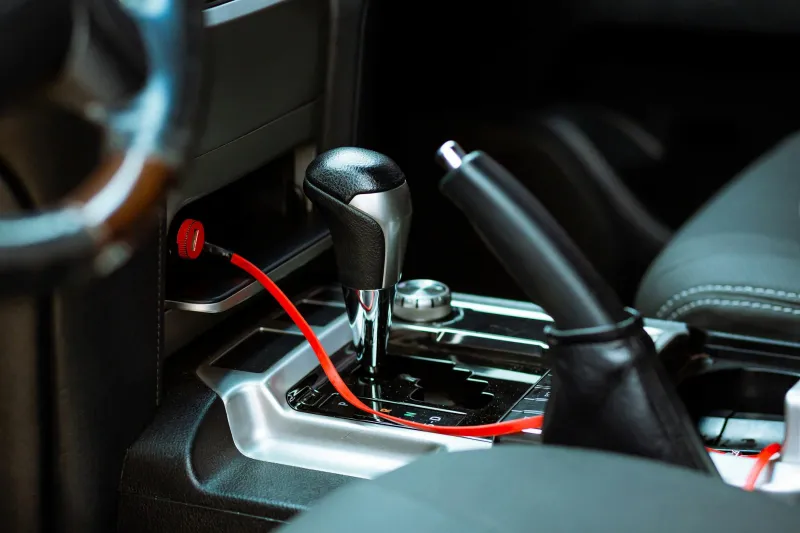
There's a lever that used to live between the driver's seat and the passenger seat in almost every car ever built. You pulled it up to hold the car on a hill. You yanked it hard in an empty parking lot when you were sixteen and thought it was hilarious. Rally drivers used it to snap the rear end around hairpin corners with surgical precision. It was mechanical, immediate, and completely under your control.
Now it's almost gone.
Over the last decade, automakers have quietly retired the traditional handbrake lever from most new passenger vehicles, replacing it with an electronic parking brake — a small button, usually mounted near the center console, that does the same basic job with far less drama. The shift has been so gradual that most buyers never even noticed it happening. But a vocal and surprisingly passionate group of drivers has noticed. And they're not happy.
Why Automakers Made the Switch
From an engineering standpoint, the move to electronic parking brakes makes a lot of sense. The traditional mechanical handbrake required a physical cable running from the lever to the rear brakes — a system that needed periodic adjustment, could stretch over time, and took up valuable interior real estate. Electronic systems eliminate all of that. They're lighter, require almost no maintenance, and can be integrated with features like auto-hold, which keeps the car stationary at a stoplight without the driver doing anything at all.
Automakers also love the freed-up space. Removing the lever opens up room for larger center consoles, wireless charging pads, and the kind of clean, minimalist cabin layouts that look great in magazine spreads and showroom floors.
For most drivers doing most things, the electronic parking brake works perfectly fine. You press a button, the car stays put. Simple.
But here's where it gets interesting.
What You Actually Lose
The traditional handbrake wasn't just a parking tool. It was a direct, analog connection between your hands and the rear wheels — one that operated completely independently of the car's main braking system. In an emergency, that independence matters more than most people realize.
Imagine your primary brakes fail on a steep downhill grade. With a mechanical handbrake, you have an immediate backup. You pull the lever, the rear brakes engage through a separate cable system, and you have a real chance of slowing down. With most electronic parking brakes, that option either doesn't exist or works so differently that using it in a panic situation is far less intuitive.
Then there's vehicle control in low-traction situations. Experienced winter drivers have long used a quick pull of the handbrake to rotate the rear of the car when navigating icy turns — a technique that gives you a measure of control when the front wheels are fighting for grip. Most electronic systems simply aren't designed for that kind of input. Some won't respond at all at speed.
And for the driving enthusiast community — the autocross regulars, the track day crowd, the weekend canyon runners — the loss goes even further. The handbrake was a tool for active driving, not just parking. Its removal represents one more step toward a car that manages itself rather than one that responds to you.
The Community That Won't Let It Go
Spend any time in enthusiast forums and you'll find threads that stretch for hundreds of posts about this exact topic. Buyers specifically seek out remaining models that still offer a traditional lever — the Mazda MX-5 Miata being one of the most frequently cited holdouts, celebrated partly for the fact that it kept the mechanical handbrake long after competitors abandoned it.
Rally and autocross communities have been particularly vocal. In those disciplines, handbrake technique is a genuine skill — something drivers spend hours practicing because it directly affects lap times and car placement. For them, the electronic alternative isn't a substitute. It's a different product entirely.
Some enthusiasts have gone as far as retrofitting older-style systems into newer vehicles, a modification that's technically complex and not exactly encouraged by manufacturers. The fact that people are willing to do it anyway says something.
Is There Any Good News?
A few automakers have heard the grumbling. Some performance-focused vehicles still offer mechanical handbrakes as either standard or optional equipment, and a handful of manufacturers have developed electronic systems with a dedicated "sport" mode that allows for more aggressive rear brake engagement. It's not the same, but it's a nod in the right direction.
There's also a broader conversation happening in the automotive world about how much autonomy drivers should have over their vehicles. As cars become more computerized, more self-managing, and more focused on convenience over engagement, the handbrake debate sits at the center of that tension.
The people asking for it back aren't just being sentimental. They're making a real argument about control, redundancy, and what it actually means to drive a car rather than ride in one.
Sometimes the most overlooked losses are the ones that happen so gradually you don't notice until the thing is already gone.