Junkyard Alchemy: The Backyard Mechanics Swapping Transmissions from Places Nobody Thinks to Look
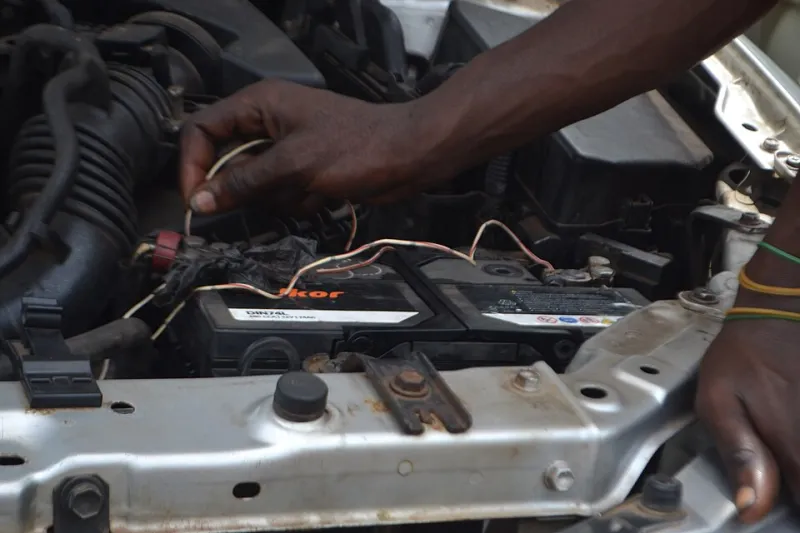
Photo: Kwamitsey, CC BY 4.0, via Wikimedia Commons
Here's a scenario that plays out thousands of times a year across America: a car owner gets a repair estimate, blanches at the number, and quietly signs the title over to a dealer or sells it off for scrap. The vehicle gets written off. Story over.
Except it's not. Not always.
Because somewhere between that estimate and the crusher, a different kind of mechanic gets involved — one who sees a dead transmission not as a death sentence, but as a puzzle with a very affordable solution hiding in an unlikely place.
The Donor Problem (And Why It's Actually Not a Problem)
The conventional wisdom in automotive repair is that replacement transmissions should come from the manufacturer, a certified rebuilder, or at minimum a same-make salvage yard. That's what dealerships push. That's what most chain shops quote around. And that logic conveniently keeps repair costs at a level that often makes buying a new car feel more rational.
But here's what the backyard community figured out a long time ago: transmissions don't care about brand loyalty.
A GM 4L60-E, for example, was dropped into Chevrolet trucks, GMC vans, Pontiac Firebirds, and a surprising range of fleet vehicles — including utility vans, airport shuttles, and government motor pool sedans. When those fleets retire their vehicles, those transmissions often have less wear than a comparable consumer unit that spent its life in stop-and-go suburban traffic. Fleet vehicles get maintained on schedule. They often run highway miles. And when the fleet is done with them, they get auctioned off — sometimes for less than the cost of a single gasket kit at a dealership.
The people who know this? They show up early on auction day.
Where the Parts Actually Come From
The sourcing networks that independent mechanics have built are genuinely impressive. It's not just salvage yards anymore — though those remain a backbone of the trade.
Decommissioned school buses have become a surprisingly rich vein. Many older American school buses ran Allison automatic transmissions, a brand that also appears in certain commercial trucks, motorhomes, and medium-duty vehicles. When a school district sells off a bus fleet, the transmissions often have well-documented service histories and relatively low stress mileage.
Overseas imports are another rabbit hole. Certain Japanese domestic market vehicles — cars that were never officially sold in the US — share transmission architectures with their American cousins. Parallel import networks, which operate in a legal gray zone, have been feeding parts into US shops for decades. A transmission pulled from a JDM vehicle in a Japanese auction can sometimes arrive stateside cheaper than a domestic rebuild, and with surprisingly low mileage given Japan's strict vehicle inspection laws.
Then there are the industrial crossovers. Forklifts, marine applications, and agricultural equipment sometimes share transmission DNA with passenger vehicles. It sounds absurd until you start tracing parts numbers, and then it starts making a strange kind of sense.
The Knowledge Gap Is the Whole Business
What makes this community function isn't just access to parts — it's the accumulated technical knowledge that mainstream shops have little incentive to develop.
Knowing that a transmission from a 1998 cargo van will bolt directly into a 1995 pickup with a simple torque converter swap isn't the kind of information you'll find in a dealer service manual. It lives in forum threads, in dog-eared printouts passed between mechanics, in the institutional memory of guys who've been doing this for thirty years and learned it from someone who did it for thirty years before them.
Mainstream shops actively discourage this line of thinking — not necessarily out of malice, but because their business model depends on part sourcing through established channels. A certified shop using an off-channel donor transmission carries liability exposure. It's easier and safer for them to quote a remanufactured unit at full retail and let the customer make the call.
The backyard mechanic doesn't have those constraints. Which is precisely why they can save someone $2,400 on a repair that would otherwise total a perfectly good car.
The Legal Gray Areas Worth Understanding
This isn't all sunshine and cheap parts, though. There are real considerations.
In some states, using salvage drivetrain components in a vehicle that will be registered and driven on public roads occupies a murky regulatory space. Emissions compliance is a genuine concern — a transmission from a different model year or application can sometimes affect how the engine management system behaves, which can translate to failed smog checks in states with strict testing.
Title washing is another hazard. Donor vehicles pulled from sketchy sources can carry hidden histories — flood damage, odometer fraud, prior salvage titles — that affect the reliability of their components. The experienced practitioners in this community have developed their own vetting processes, but for a newcomer, the risks are real.
And then there's the simple mechanical reality: a swap that looks compatible on paper can still go sideways if the donor unit was in worse shape than advertised. The skill floor here is genuinely high.
Why This Matters Beyond the Garage
There's a bigger story hiding inside this subculture. The transmission swap underground is, in its own way, a form of automotive preservation — a pushback against the throwaway economics that the industry has quietly built around modern repair costs.
Every car that gets resurrected by a backyard mechanic with a donor unit from a retired shuttle van is a car that didn't need to be manufactured from scratch. Every owner who learns to navigate this world gains a kind of mechanical literacy that the dealership model is specifically structured to prevent.
The knowledge is out there. It's in forums, in dusty repair manuals, in the heads of mechanics who learned it the hard way. The only thing standing between most car owners and this world is the assumption that the dealer's estimate is the only number that matters.
It isn't.