The Mysterious Numbers and Letters on Your Gear Shifter That Could Transform Your Drive
The Alphabet Soup Nobody Talks About
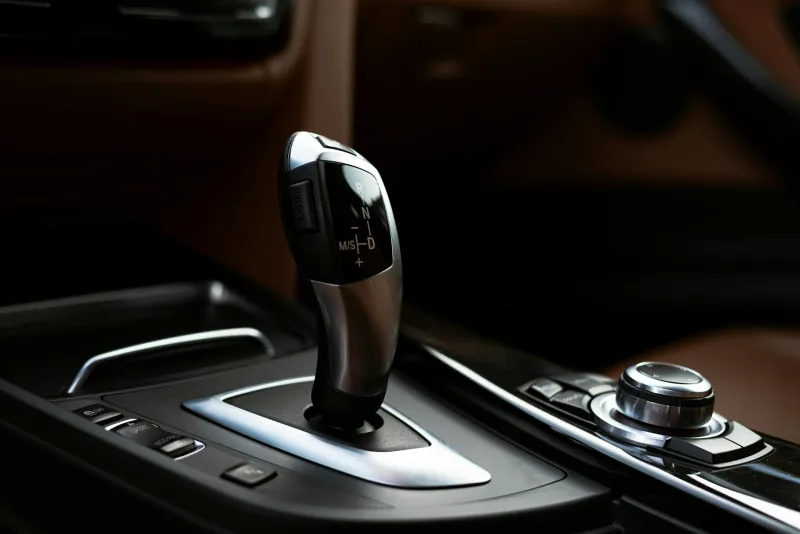
Look down at your automatic transmission shifter right now. Past the familiar P-R-N-D sequence, you'll likely see some combination of numbers and letters that might as well be hieroglyphics: 3, 2, 1, L, S, or maybe even something like D3 or M. If you're like most drivers, you've probably wondered what they do, shrugged, and gone back to living in Drive forever.
Here's what nobody tells you: those mysterious markings represent one of the most practical driving techniques that somehow got lost in translation as America fell in love with automatic transmissions. They're your gateway to engine braking — a skill that was once as fundamental as knowing how to parallel park.
When Cars Had Opinions About Hills
Back in the 1960s and 70s, when automatics were still finding their footing, drivers understood that their transmission wasn't just a set-it-and-forget-it device. It was a tool with multiple settings for different situations. Descending a mountain pass in Colorado? Drop it into 2nd gear and let the engine do the work. Navigating San Francisco's legendary hills? 1st gear would keep you from riding the brakes into oblivion.
This wasn't exotic knowledge — it was driver's ed basics. But as transmissions got smarter and more sophisticated, something strange happened. The technique didn't disappear from cars; it disappeared from common knowledge.
The Physics Your Brakes Wish You Understood
Here's the thing about brakes: they're essentially friction machines designed to convert your car's momentum into heat. Do this repeatedly on a long downhill stretch, and that heat builds up fast. Really fast. Hot brakes fade, meaning they become less effective right when you need them most. In extreme cases, they can fail entirely.
Engine braking flips the script. Instead of using friction to slow down, you're using the engine's natural compression to create resistance. When you shift into a lower gear range, the transmission holds that gear instead of automatically upshifting. Your engine becomes a speed limiter, maintaining a steady pace without your foot touching the brake pedal.
The result? Your brakes stay cool, your brake pads last longer, and you maintain better control over your speed. It's physics working for you instead of against you.
The Lost Art in Action
So how does this actually work in your modern automatic? It's simpler than you might think, but timing matters.
For gentle downhill grades — think highway off-ramps or winding country roads — shifting into 3 or D3 (if your car has it) is usually perfect. Your car will stay in third gear, providing just enough engine resistance to maintain a steady speed without constant brake tapping.
Steeper descents call for more aggressive measures. Second gear (marked as 2 or sometimes D2) creates significantly more engine braking. This is your go-to for mountain passes or those terrifying parking garage spirals that seem to descend into the Earth's core.
First gear or L (Low) is the nuclear option, reserved for the steepest situations or when you need maximum control at very low speeds.
Why Your Transmission Actually Loves This
Here's an unexpected bonus: using these gear ranges can actually extend your transmission's life. Modern automatics are incredibly sophisticated, but they're also constantly making decisions about when to shift. On hills, this can lead to a frustrating dance of upshifts and downshifts as the transmission tries to find the right gear for the conditions.
By manually selecting a gear range, you're eliminating that confusion. The transmission can focus on what it does best — smoothly managing power delivery — instead of playing a guessing game about your intentions.
The Modern Twist
Today's cars have added new wrinkles to this old technique. Many newer automatics have manual modes accessed through paddle shifters or a separate gate on the shifter. These give you even more precise control, essentially turning your automatic into a manual transmission when you want it to be.
Some trucks and SUVs have specific "tow/haul" modes that automatically use more aggressive engine braking when they detect you're pulling a trailer or carrying a heavy load. It's the same principle, just automated.
Rediscovering What Was Never Really Gone
The next time you're facing a long downhill stretch, remember that your car is equipped with a speed control system that's been hiding in plain sight. Those mysterious markings on your shifter aren't relics from a bygone era — they're tools waiting to be rediscovered.
Your grandfather might not recognize the touchscreen infotainment system or the backup camera, but he'd smile knowingly at the way you handle a mountain pass with nothing but engine compression and a little bit of forgotten wisdom.
After all, the best automotive technologies aren't always the newest ones. Sometimes they're the ones that never really went away — they just got overlooked in our rush toward the next big thing.