The Lost Symphony of the Road
In the 1930s, if you stood beside a lonely stretch of highway at dawn, you might have heard something that would puzzle modern drivers: the sound of a massive truck approaching, then suddenly going nearly silent as it passed, only to resume its rumble as it disappeared into the distance. This wasn't mechanical failure—it was the work of a master trucker practicing an art that's almost extinct today.
Float shifting, or "floating gears," was the technique that separated amateur drivers from road veterans. Instead of using the clutch to change gears, experienced truckers learned to match engine speed so precisely that they could slip the transmission into the next gear with nothing more than gentle pressure on the gear stick.
When Every Mile Mattered
During the Great Depression, when every gallon of fuel and every mile of engine life could mean the difference between profit and bankruptcy, float shifting wasn't just a neat trick—it was economic survival. Professional drivers discovered that constantly riding the clutch wore out expensive components that most truckers couldn't afford to replace.
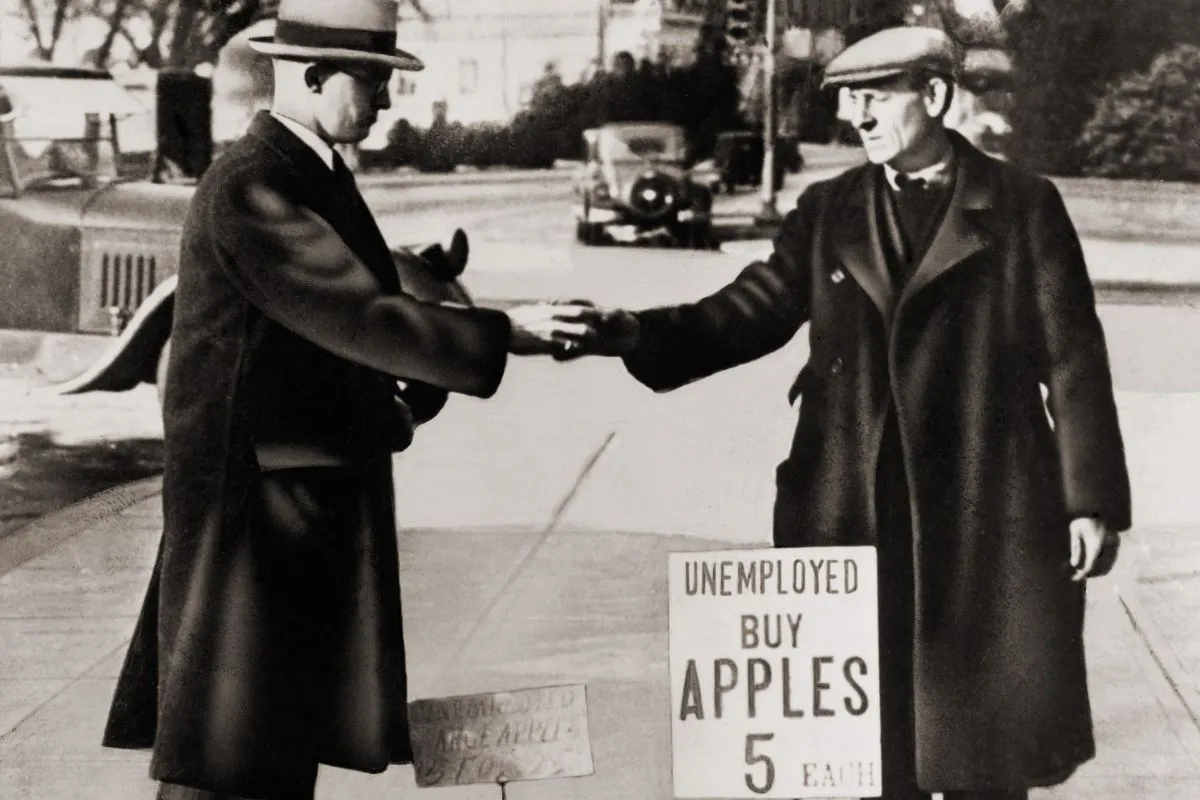 Photo: Great Depression, via www.delhimindclinic.com
"My grandfather could shift through all eighteen gears without ever touching that clutch pedal," recalls Mike Henderson, a third-generation trucker from Oklahoma. "He said it was like learning to dance with the engine. You had to feel what it wanted to do next."
The technique worked because of the mechanical nature of older transmissions. Unlike modern synchronized gears that automatically match speeds, Depression-era truck transmissions required the driver to become a human computer, calculating engine RPM, road speed, and gear ratios in real time.
The Physics of Silence
Float shifting created those moments of eerie quiet because the engine would temporarily disconnect from the drivetrain. As truckers lifted off the accelerator and moved the gear stick into neutral, the massive diesel would drop to idle while the truck continued rolling on momentum alone. For those few seconds, a 40-ton rig would coast down the highway making barely more noise than a bicycle.
The real skill came in timing the shift into the next gear. Drivers had to feel the exact moment when the transmission's input shaft matched the speed of the gear they wanted to engage. Too early or too late, and the gears would grind—an expensive mistake that could damage the transmission.
Why the Art Nearly Died
By the 1980s, truck manufacturers began installing synchronized transmissions and later, automated manual transmissions that handled gear changes electronically. Suddenly, the decades of accumulated knowledge about float shifting became obsolete almost overnight.
"The new drivers coming up didn't need to learn it," explains retired trucker education instructor Bob Martinez. "The computers could shift faster and more efficiently than even the best human drivers. But something was lost in that transition."
Modern truck driving schools barely mention float shifting, if they teach it at all. The focus shifted to operating electronic systems and managing computerized engine controls rather than developing the almost supernatural feel for machinery that older drivers possessed.
The Underground Revival
Yet in truck stops across America, a small community of driving purists keeps the tradition alive. They seek out older trucks with manual transmissions and practice the technique not for practical reasons, but for the deep connection it creates between driver and machine.
"When you can float shift properly, you understand how the entire drivetrain thinks," says Sarah Chen, who learned the technique from YouTube videos and practice sessions with her 1995 Peterbilt. "You feel every component working together. It's like being fluent in a language that machines speak."
These enthusiasts argue that float shifting teaches fundamental lessons about vehicle dynamics that modern automated systems obscure. They point out that understanding gear ratios, engine braking, and power band management makes drivers better at handling emergency situations, even in modern trucks.
More Than Just Nostalgia
While float shifting might seem like a quaint historical footnote, the technique reveals something important about how technology changes our relationship with machines. Depression-era truckers developed an intuitive understanding of their vehicles that modern drivers rarely achieve.
The ability to change gears without a clutch required reading dozens of subtle signals: the sound of the engine, the feel of vibration through the steering wheel, the slight changes in momentum as the truck crested hills or entered curves. This constant feedback loop created drivers who could diagnose mechanical problems by feel long before they became serious issues.
Today's trucks are undoubtedly more efficient, reliable, and easier to operate. But as the last generation of float-shifting drivers retires, we're losing a form of mechanical intuition that took decades to develop. In our rush toward automation, we might be forgetting that some kinds of knowledge can only be learned through the patient cultivation of human skill.
The next time you hear a truck shifting gears on the highway, listen carefully. If it sounds too smooth, too quiet, you might be witnessing one of the last practitioners of an almost extinct art—a driver who learned to make a machine whisper by understanding exactly what it was trying to say.