Your Tachometer Is Hiding a Fuel Economy Secret Most Drivers Never Find
Your Tachometer Is Hiding a Fuel Economy Secret Most Drivers Never Find
Here's something that'll mess with your head the next time you're stuck in traffic watching the pump prices on a gas station sign: the way most Americans drive is actively working against their fuel economy — and the fix has been sitting right there on the dashboard the whole time.
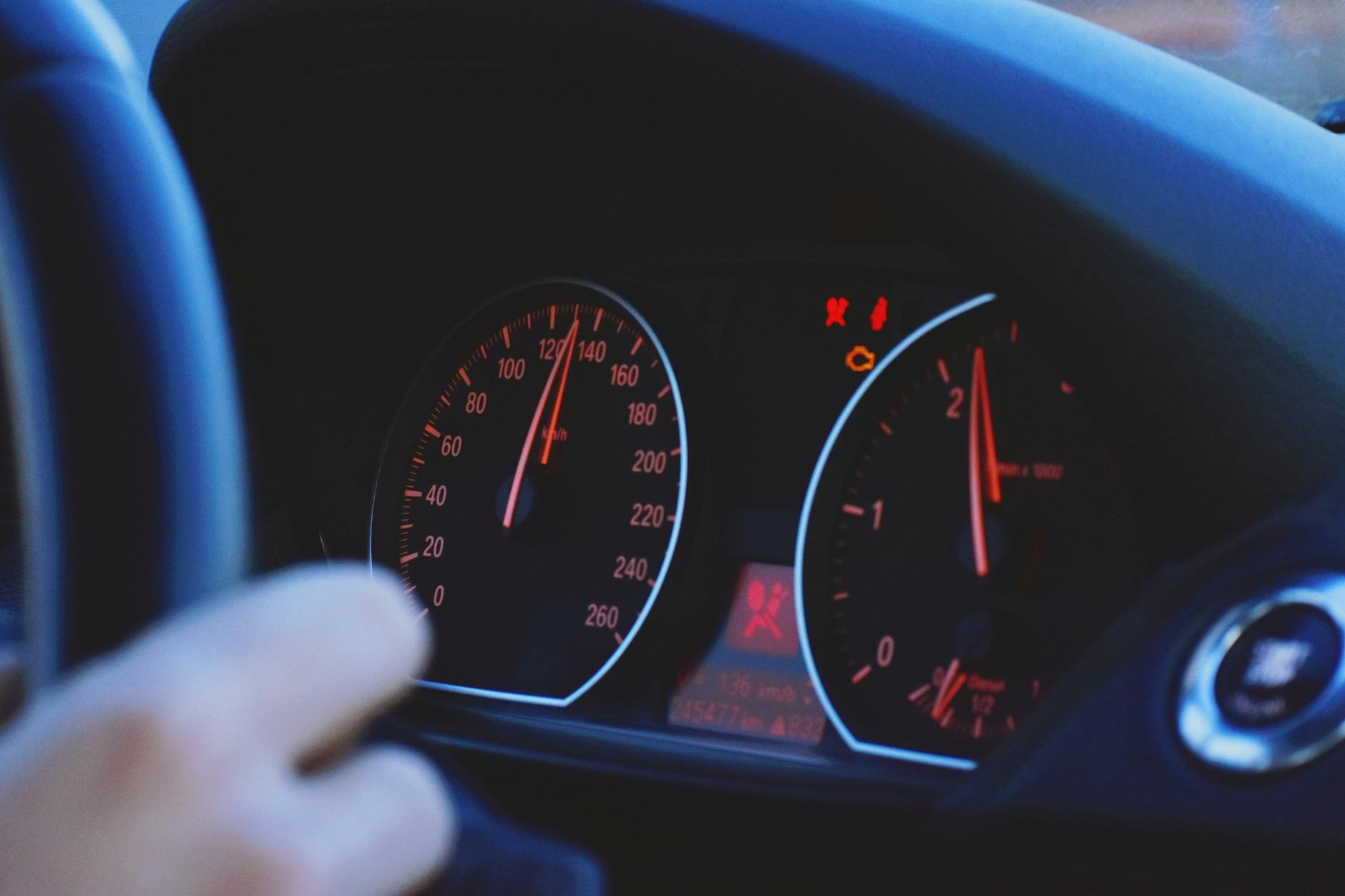
We're talking about the tachometer. That dial most drivers treat like dashboard wallpaper.
The Myth of "Lower Is Always Better"
The conventional wisdom goes something like this: keep your RPMs low, save gas. It sounds logical. Lower engine speed, less fuel burned. Simple math, right?
Not exactly.
Internal combustion engines don't operate at the same efficiency across the entire RPM range. They have what engineers call a peak thermal efficiency zone — a specific band of engine speeds where the combustion process converts the most fuel energy into actual forward motion, rather than heat, vibration, and mechanical loss.
For most passenger cars on American roads today, that sweet spot tends to fall somewhere between 1,500 and 2,500 RPM, though the exact number varies depending on your engine's displacement, compression ratio, and whether it's naturally aspirated or turbocharged.
Drop below that range — say, lugging along at 1,000 RPM in too high a gear — and the engine actually has to work harder to maintain combustion stability. The fuel-air mixture doesn't burn as cleanly. Efficiency tanks. You're essentially starving the engine of the mechanical momentum it needs to do its job well.
Why Your Automatic Transmission Might Be Sabotaging You
Here's where it gets interesting — and a little frustrating.
Modern automatic transmissions are programmed to shift up early. Manufacturers tune them this way partly to hit EPA fuel economy test numbers and partly because most drivers interpret smooth, early upshifts as a sign of a "refined" vehicle. The result is that your car often settles into a gear that puts the engine below its efficiency sweet spot, especially at steady highway speeds or gentle city cruising.
Some drivers in hilly terrain notice this as a kind of hunting behavior — the transmission can't decide whether to stay in a higher gear or drop down, so it cycles back and forth. That indecision is your transmission fighting against the engine's natural efficiency curve.
The fix, at least for drivers with manual shift modes or paddle shifters, is surprisingly simple: learn where your engine likes to live. A quick glance at the tach during normal driving — not flooring it, not coasting — will show you the range where throttle response feels crisp and the engine sounds settled. That's your zone.
The Turbo Twist
If you're driving a turbocharged engine — and with the industry's push toward smaller, boosted motors, there's a solid chance you are — the efficiency story shifts a bit.
Turbocharged engines often develop their peak torque at surprisingly low RPMs, sometimes as low as 1,500. But they also have a lag zone just below boost threshold where efficiency drops off sharply. The practical takeaway: with a turbo engine, staying just above that boost threshold during steady driving often yields better real-world economy than the transmission's default programming suggests.
This is part of why some European turbodiesel drivers have long practiced what they call "short shifting" — manually upshifting earlier than normal to keep the engine in boost without over-revving. It's a technique that translates surprisingly well to modern American turbocharged gas engines.
What Actually Happens When You Watch the Tach
Most drivers have never developed the habit of glancing at their tachometer the way they glance at the speedometer. It takes maybe two weeks of conscious practice before it becomes second nature.
What you'll notice pretty quickly: there's a dramatic difference in how the engine feels and sounds between 1,800 RPM and 1,200 RPM at the same road speed. One feels composed and ready. The other feels slightly strained, like you're asking it to do something it doesn't want to do.
Pay attention to that sensation. It's your engine telling you something the fuel economy readout takes a few seconds to catch up to.
On long highway drives especially, experimenting with which gear keeps you in that 1,800–2,200 RPM range — rather than defaulting to whatever the transmission picks automatically — can make a measurable difference in your miles-per-gallon over the course of a road trip.
The Dashboard Gauge Nobody Taught You to Use
There's a certain irony in the fact that automakers spend thousands of dollars engineering engines to run efficiently at specific speeds, then design interiors where the speedometer is front and center while the tachometer gets tucked off to the side — or eliminated entirely in favor of a digital readout buried in a menu.
The efficiency sweet spot isn't a secret in any conspiratorial sense. It's in the engineering specs. Mechanics know it. Enthusiasts know it. But somehow, in the decades of driver education and fuel economy marketing campaigns, it never quite made it into the mainstream conversation.
Next time you fill up and wince at the total, give the tach a second look. The answer to better mileage has been sitting there the whole time, just waiting for someone to notice it.