The Number Under the Hood That Blows Mileage Out of the Water
There's a ritual every used-car buyer performs without thinking. You walk up to the vehicle, glance through the window, and your eyes go straight to the odometer. Sixty thousand miles? Great. A hundred and forty thousand? You start backing away slowly. It feels like the most logical shortcut in the world.
But here's what the guy at the dealership isn't going to tell you — and what a fleet mechanic with thirty years of experience absolutely knows: mileage is one of the laziest ways to judge a used car's real condition. The number that actually matters is one most buyers have never even heard of.
Miles Don't Tell the Whole Story
Think about what a mile actually measures. It tells you how far the car traveled. It says nothing about how it got there.
A vehicle that spent its life cruising at 65 mph on a flat Texas highway accumulates miles gently, with the engine spinning at a relaxed, efficient RPM and the drivetrain operating well within its comfort zone. Now picture a nearly identical car used for urban food delivery — constantly stopping, starting, idling in traffic, and running hard for short bursts before slamming to a halt again. Both cars might read 80,000 miles on the clock. One of them has been through the mechanical equivalent of a marathon. The other just ran sprints on a gravel track.
This is where engine hours come in.
What Engine Hours Actually Are
Engine hours measure how long an engine has been running — regardless of whether the car moved an inch. They're standard metrics in the trucking, marine, and heavy equipment industries, where everyone already knows that idle time destroys engines just as surely as highway miles do.
Here's the rough math that changes everything: at highway speeds, a car travels about 60 miles per engine hour. So a vehicle with 60,000 miles and roughly 1,000 engine hours lived a relatively easy life. But a city taxi or a rideshare vehicle might log 60,000 miles with 2,500 or even 3,000 engine hours — because it spent enormous amounts of time sitting with the engine running, crawling through traffic, and working the drivetrain hard in stop-and-go conditions.
That extra idle time isn't neutral. Engines running at low RPM without load don't circulate oil as effectively, run cooler than optimal operating temperature, and build up carbon deposits faster. Short trips mean the engine never fully warms up, which accelerates wear on cylinder walls and piston rings. Mechanics who work on high-idle-time vehicles see this damage written clearly in the metal.
Where This Data Is Actually Hiding
Here's the part that surprises most people: on many modern vehicles, this information already exists. It's just buried.
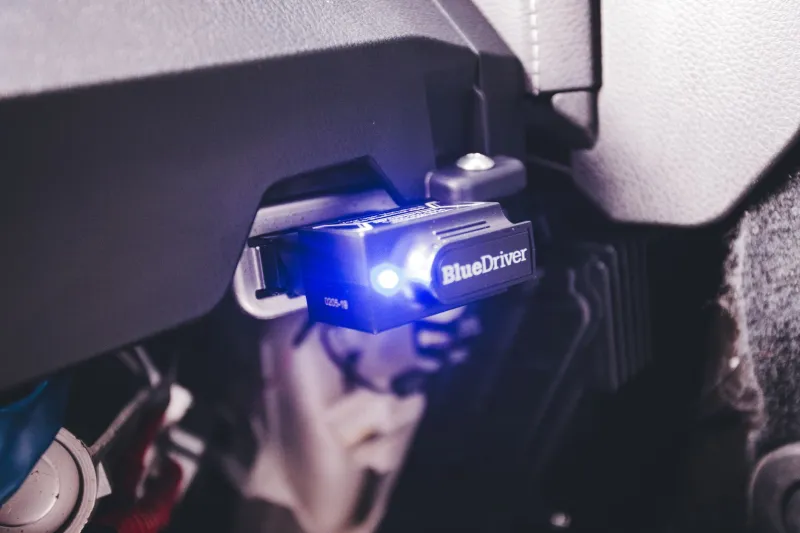
Many OBD-II systems — the diagnostic port under your dashboard that mechanics plug into — log engine run time, not just distance. Dedicated scan tools, and even some consumer-grade apps paired with a cheap OBD-II Bluetooth dongle, can pull this data directly from the car's ECU. Fleet vehicles often have telematics systems that track idle ratios obsessively, because fleet managers figured out decades ago what most private buyers still haven't: idle time is money, and it's wear.
Beyond raw hours, some ECUs also log load cycles — essentially how often the engine has been pushed into higher demand ranges. Towing, mountain driving, and repeated hard acceleration all register differently than gentle commuting. A truck that spent its life hauling a camper every weekend carries a very different mechanical biography than one that mostly made grocery runs, even if the odometer reads the same.
The 40,000-Mile Car That's More Tired Than One With 120,000
This isn't theoretical. Fleet mechanics who manage municipal vehicles, delivery fleets, and utility trucks see this constantly. A pickup with 40,000 miles that spent two years as a construction site runabout — idling for hours while equipment operators worked, loaded to capacity on rough terrain, never really warmed up properly — can have transmission wear, oil sludge, and brake fade that would embarrass a well-maintained personal vehicle with three times the mileage.
Conversely, a 120,000-mile car owned by a retired couple who drove it exclusively on long road trips might have an engine that's barely broken in relative to its age. The miles came easy. The load was light. The heat cycles were long and consistent.
What to Actually Do With This
Next time you're evaluating a used vehicle, here's a practical checklist that goes beyond the odometer:
Ask about the car's use history. City driving, rideshare, delivery, towing — any of these flags a harder life than suburban commuting. Carfax and AutoCheck reports sometimes reveal commercial use history that sellers conveniently forget to mention.
Grab a cheap OBD-II scanner. A $25 Bluetooth dongle and a free app can pull engine run time from many vehicles. If the hours seem high relative to the mileage, ask questions.
Look for the signs of high idle time. Excessive carbon buildup on the tailpipe, unusual oil sludge when you pull the dipstick, or a thermostat that takes forever to bring the engine to temperature are all physical clues.
Check transmission service history. High-cycle driving destroys automatic transmissions faster than almost anything else. If the service records don't show regular fluid changes, walk.
The Metric That Actually Matters
Mileage isn't useless — it's just incomplete. It's a single data point that buyers have been trained to treat as the whole story, mostly because it's the easiest number to see through a car window.
The mechanics who actually know cars have always understood that how those miles happened matters more than how many there are. Engine hours, idle ratios, and load history are the real biography of a vehicle. And now that modern cars log this data automatically, there's no excuse not to read it.
The odometer tells you where a car has been. The ECU tells you what it went through to get there. Start reading the right number.