The Japanese Driving Mindset That American Roads Desperately Need
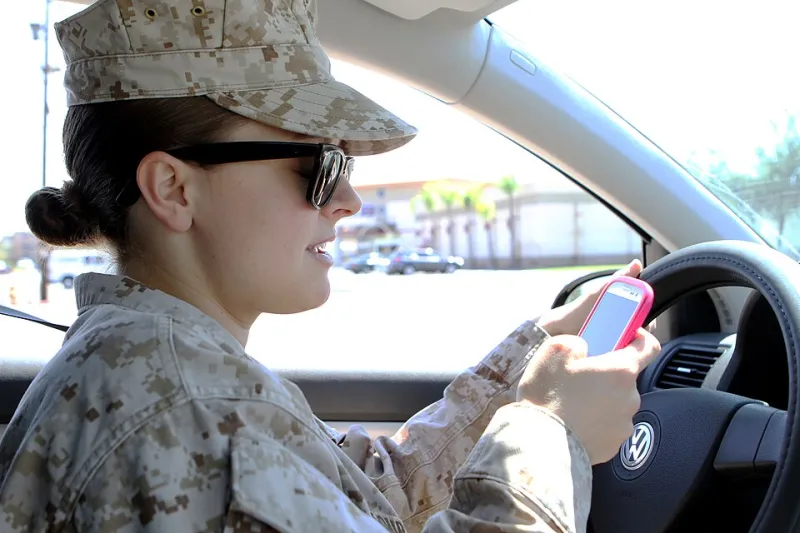
Photo: Cpl. Melissa Wenger, Public domain, via Wikimedia Commons
Most American drivers learned to drive in roughly the same way. A nervous teenager behind the wheel of a family sedan, an instructor in the passenger seat, and a curriculum built around checking mirrors, signaling properly, and not rolling through stop signs. Then came the highway portion, maybe a little parallel parking practice, and eventually a license.
For drivers who wanted to go further, there were defensive driving courses — the kind insurance companies discount and traffic courts mandate. Those classes teach you to maintain following distance, scan intersections before entering, and assume other drivers are unpredictable.
All of that is useful. None of it is what a small, quietly influential group of American driving instructors have been teaching instead.
A Concept Born in Japanese Commercial Trucking
Mizen Boushi — roughly translated as "accident prevention before it happens" — originated not in a driving school but in Japan's commercial trucking industry, where the stakes of a crash are enormous and the pressure to find every possible safety edge is relentless.
 Photo: Mizen Boushi, via ai2-s2-public.s3.amazonaws.com
The philosophy is deceptively simple to describe and surprisingly difficult to fully practice. Rather than reacting to hazards as they develop — which is the core of defensive driving — Mizen Boushi trains drivers to build and constantly update a mental model of every potential hazard source in their environment, even ones that haven't become threats yet.
Defensive driving says: that car is weaving, keep your distance. Mizen Boushi says: that parked delivery truck three blocks ahead has its flashers on, which means a driver is about to open a door, a pedestrian may step around the front, and the car behind me may brake-check when they see it — so I'm adjusting my speed and lane position right now.
The difference sounds subtle. In practice, it rewires how you process an entire road environment.
How It Actually Works Behind the Wheel
Instructors who teach Mizen Boushi in the US — most of them connected to commercial driver training programs or imported the technique through advanced motorsport instruction backgrounds — describe it as building what they call a "hazard inventory" that runs continuously and updates in real time.
Every element of the environment gets mentally tagged: the kid on the sidewalk who might run into the street, the sun angle that will blind oncoming drivers at the next intersection, the wet leaves on the curve ahead that aren't a problem at this speed but would be if you needed to brake hard. Nothing gets dismissed as irrelevant until the moment it actually is.
This is fundamentally different from standard American driver education, which is largely reactive and event-triggered. You learn to respond when something goes wrong. Mizen Boushi trains you to see the conditions that make something going wrong more likely — and neutralize them before the event ever starts.
Drivers who've trained in this method describe a strange perceptual shift after a few weeks of practice. The road starts to feel slower. Not because they're driving slower, but because their brain is processing farther ahead, and surprises become rarer.
The Evidence That Never Got Amplified
Here's where the story gets a little frustrating. Studies of Mizen Boushi application in Japanese commercial fleets showed meaningful reductions in near-miss incidents and minor collisions — the kind of small fender-benders and close calls that don't make headlines but are statistically the precursors to serious crashes.
A handful of American researchers and safety advocates noticed. Some fleet operators quietly adopted modified versions of the training for their commercial drivers. A few advanced driving programs tucked elements of it into their curricula without necessarily using the Japanese name.
But it never made the jump to mainstream American driver education. And the reasons are frustratingly mundane.
US driver education is largely standardized at the state level, built around a licensing test framework that prioritizes measurable, observable behaviors — checking mirrors, signaling, stopping distances. Mizen Boushi is fundamentally a cognitive skill. You can't easily grade someone's mental hazard inventory. It doesn't fit neatly into a checklist, and it takes sustained practice to develop rather than a few classroom hours.
Insurance company discount programs, which have enormous influence over what "safety" means in American driving culture, are similarly oriented toward rule-following metrics. A technique that lives entirely inside a driver's head is hard to certify, hard to sell, and hard to measure in the short term.
What Everyday Drivers Can Actually Take From This
The good news is that the core of Mizen Boushi doesn't require a formal course. It starts with a single habit shift: stop waiting for hazards to announce themselves and start asking where could a problem come from before it does.
On a practical level, this means expanding your attention from the car directly ahead to the full environment — the cross street two blocks up, the cyclist who's about to reach a gap in parked cars, the truck that's been riding your blind spot for the last mile. It means reading road conditions not just for what they are but for what they'd mean if something unexpected happened.
It's also about building what some instructors call "what-if loops" — brief mental simulations that run almost automatically with practice. What if that light changes now? What if that car doesn't yield? What if this lane narrows? Not anxious catastrophizing, but calm, rapid probability assessment.
A Safety Idea Worth Stealing
American driving culture has always been more reactive than proactive. We build better guardrails after crashes happen. We add warning signs after enough accidents occur at a particular intersection. We take defensive driving after a ticket, not before.
Mizen Boushi is a fundamentally different posture — one that treats the road as a dynamic, constantly shifting puzzle to be read rather than a set of rules to follow. That it never made it into American driver's ed isn't a reflection of its value. It's a reflection of how hard it is to teach something that happens entirely inside a driver's head.
But that's exactly what makes it worth knowing about.