The Used Car Goldmine That Insiders Drain Before You Even Know It Exists
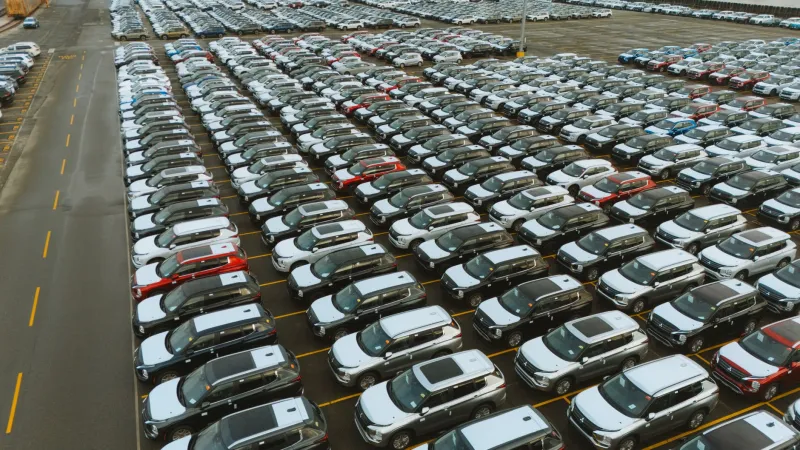
If you've spent any time shopping for a reliable used car, you've probably been told some version of the same advice: low mileage is good, high mileage is risky, and fleet vehicles are worn out. It's conventional wisdom that sounds reasonable on the surface. It's also, in specific and important ways, wrong — and a small group of buyers has been quietly exploiting that gap in public knowledge for years.
These aren't professional flippers or gray-market dealers. They're fleet managers who buy for municipal garages, independent mechanics who've watched certain platforms rack up 300,000 miles with nothing more than scheduled maintenance, and patient private buyers who've learned to look where the general public doesn't think to look. And they're consistently finding some of the most durable used vehicles in America before those cars ever see a retail lot.
Why High-Mileage Fleet Cars Are Often More Reliable Than Low-Mileage Private Sales
This is the counterintuitive core of the whole thing, and it's worth understanding before anything else.
Fleet vehicles — the kind operated by rental agencies, utility companies, government departments, and corporate pools — are maintained on strict schedules because the organizations running them have liability exposure if something fails. Oil changes happen at intervals, not "whenever I remember." Tire rotations are logged. Brake inspections are documented. The maintenance history on a well-run fleet vehicle is often more complete and more consistent than what you'll find on a three-year-old car with 28,000 miles that its previous owner "took care of."
There's also a mechanical argument. Modern engines — particularly the high-volume, proven platforms that fleet buyers favor — are actually designed to operate best when they run regularly and reach full operating temperature consistently. A car that commutes 30,000 miles a year on highways, reaching full temp and holding it, often experiences less wear per mile than one that does 8,000 miles annually in short cold-start urban trips. The engine that looks impressive on paper (low miles, single owner) may have spent most of its life in a thermal stress cycle that harder-used highway miles never produce.
The Platforms Insiders Actually Target
Not every fleet vehicle is worth chasing. The buyers who do this well have narrowed their focus to platforms with documented long-term durability records — the kind that independent mechanics and high-mileage owner communities have validated over hundreds of thousands of miles.
Toyota Camry and Corolla variants are perennial targets, particularly those with the 2.5-liter four-cylinder that rental agencies ran in enormous volumes through the 2010s and early 2020s. Ford Crown Victoria Police Interceptors — older, yes, but extraordinarily overbuilt for their intended purpose — have their own dedicated following among buyers who want a car that was literally engineered to idle for eight hours a day without complaint. More recently, the Ford Fusion Hybrid has attracted attention from savvy buyers who recognize that rental fleets gave its hybrid drivetrain an involuntary endurance test that proved the system's durability at scale.
 Photo: Ford Crown Victoria Police Interceptor, via bringatrailer.com
Utility company fleets — the trucks and vans operated by electric, gas, and telecom companies — often yield well-maintained pickups and cargo vans that were serviced by dedicated in-house mechanics. These vehicles sometimes show cosmetic wear that depresses their auction price well below their mechanical value.
Where the Cars Actually Go Before the Public Sees Them
This is the part most buyers never figure out. When rental agencies, municipalities, or corporations cycle out their vehicles, they don't typically send them straight to a used car lot. They move through a remarkably accessible — but largely unpublicized — auction infrastructure.
ADESA and Manheim are the two dominant wholesale auto auction networks in the US. Both have historically been dealer-only, but Manheim has opened a consumer-facing platform (Manheim Express), and ADESA's parent company operates BacklotCars and other channels that individual buyers can access with some registration effort. Inventory at these auctions includes massive volumes of rental returns, off-lease fleet vehicles, and corporate disposals.
GSA Auctions (GSA.gov/buying-selling/purchasing-programs/gsa-auctions) is the federal government's official auction channel for surplus vehicles. This is where decommissioned federal agency cars, park service trucks, and military-adjacent civilian vehicles end up. Registration is free and open to the public. Most buyers have never heard of it.
 Photo: GSA Auctions, via i.ytimg.com
IronPlanet and Purple Wave handle heavy equipment and work truck auctions, where utility company and municipal fleet vehicles frequently appear. GovPlanet, a sister platform, specializes in government surplus specifically.
State and county surplus auctions are often run through local government websites or contracted to regional auction companies. A quick search for "[your state] surplus vehicle auction" will usually surface the relevant agency. These are frequently ignored by out-of-state buyers, which means local bidders face surprisingly thin competition.
How to Approach It Without Getting Burned
The risks in fleet auction buying are real but manageable. You typically can't take a vehicle to a mechanic before bidding, which means condition reports and visual inspections do a lot of work. Learning to read auction condition grades, understanding what "as-is" actually means in legal terms, and setting firm price ceilings before you bid are all non-negotiable disciplines.
For first-time auction buyers, starting with GSA or a state surplus sale is lower-stakes than jumping into a major wholesale channel. Vehicles are often available for in-person preview, prices are sometimes surprisingly low due to limited competition, and the transaction process is straightforward.
The buyers who do this consistently well also run VIN checks (CARFAX or AutoCheck), cross-reference the build date against the model's known reliability history, and prioritize platforms they already understand mechanically — or that a trusted independent mechanic can assess quickly.
The vehicles are out there, cycling through channels that most buyers walk right past. The people who've figured that out are already in line. The question is whether you want to join them.