The 3 A.M. Mechanics Who Keep America's Store Shelves Stocked
The 3 A.M. Mechanics Who Keep America's Store Shelves Stocked
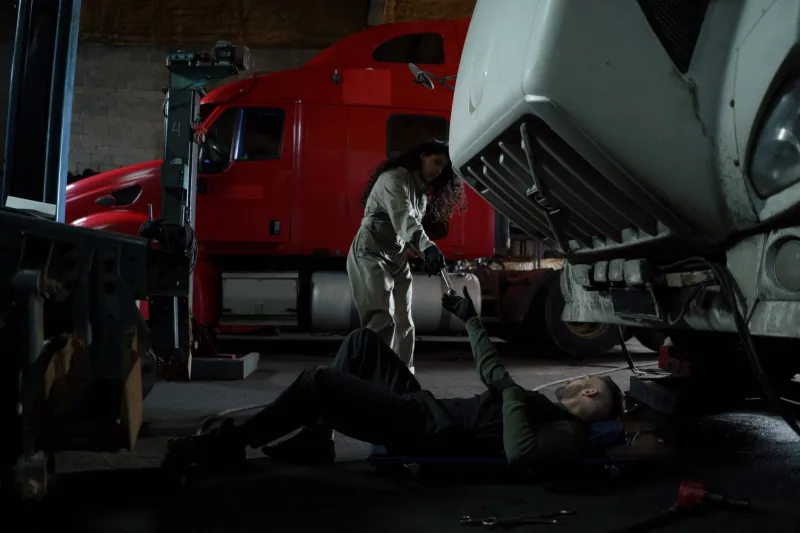
Pull into a major truck stop off I-40 or I-80 at three in the morning and you'll find something most motorists drive right past: the far end of the parking lot, where the big rigs idle in long rows, is occasionally lit up by a pair of work lights and the glow of a diagnostic tablet. Somewhere underneath one of those trucks, a mechanic in a worn jacket is doing something that would be considered fairly extraordinary in any other context — repairing a 13-liter diesel engine in an open parking lot, in the dark, with a freight deadline ticking.
This is the world of the overnight truck stop repair crew. And it's one of the more quietly essential subcultures in American logistics.
The Problem That Created the Profession
Commercial trucking runs on time. A load of refrigerated produce, pharmaceutical freight, or automotive parts that misses its delivery window doesn't just inconvenience a warehouse manager — it can trigger cascading delays across an entire supply chain. When a truck breaks down between cities, the driver has a narrow set of options: wait for a dealership to open in the morning, or call someone who'll come right now.
The "come right now" option is where the overnight mobile diesel mechanic enters the picture.
These aren't roadside assistance dispatchers reading from a script. Many are independent operators or small crews contracted through emergency breakdown services, working irregular hours in exchange for premium rates and the kind of diagnostic freedom that a dealership bay never offers. Their office is whatever parking lot the truck managed to limp into. Their clock is the driver's delivery window.
What the Job Actually Demands
Diesel mechanics who work overnight breakdown calls develop a particular skill set that diverges significantly from shop-based repair work. In a dealership service bay, a technician has a lift, a full tool chest, controlled lighting, and the ability to order parts and wait. On a parking lot at 2 a.m., none of those luxuries exist.
What replaces them is a finely tuned diagnostic instinct built from repetition under pressure. Experienced overnight mechanics describe learning to read an engine through sound, vibration, and exhaust behavior in ways that go well beyond what a scanner tool reports. A certain knock at idle that changes pitch under load tells a story. The color and smell of exhaust at startup narrows a fault code down to a root cause rather than a symptom. The way a truck idles after a hard mountain run versus a flat highway cruise paints a picture of where stress has accumulated.
"The scanner gives you a starting point," one mechanic who works the I-10 corridor in Texas explained in an industry forum. "But the truck tells you the real story if you know how to listen."
This kind of intuitive, pressure-tested knowledge is something the trucking industry has long recognized as genuinely rare. Dealership technicians work on a wider variety of problems in more controlled conditions. Overnight breakdown mechanics work on a narrower slice of catastrophic failures, repeatedly, in the worst possible conditions — and that repetition produces a depth of expertise that's hard to replicate any other way.
The Improvisation Factor
Perhaps the most striking aspect of this work is the degree to which these mechanics improvise — not sloppily, but creatively. When the nearest parts supplier won't open for six hours and a driver needs to move in two, the question becomes: what can be done safely with what's available?
Temporary fuel line repairs, creative workarounds for failed sensors, field-expedient solutions to air system leaks — overnight mechanics build a mental library of legitimate short-term fixes that get a truck to the nearest full-service facility without worsening the underlying problem. The distinction between a proper repair and a safe temporary fix is something they learn to make quickly and accurately, because getting it wrong means a breakdown on the highway instead of a truck stop.
This isn't cutting corners. It's a form of triage that requires knowing the system well enough to understand exactly what can wait and what absolutely cannot.
The Supply Chain Connection Most People Never Make
The United States moves roughly 72 percent of its freight by truck. When a reefer unit carrying dairy products or a flatbed hauling construction materials breaks down, that freight has a physical expiration date on its usefulness. The overnight mechanic who gets that truck rolling again by 5 a.m. isn't just helping one driver make a deadline — they're a node in a logistics network that connects farms, factories, and distribution centers to the stores and job sites that depend on them.
It's a connection most consumers never make when they pull a carton of eggs off a refrigerated shelf or walk into a hardware store that's fully stocked. The supply chain is only as reliable as its least visible repair.
A Trade With No Shortage of Work
The trucking industry has documented a persistent shortage of qualified diesel technicians for years, and the overnight breakdown niche feels it acutely. The hours are brutal, the conditions are uncomfortable, and the diagnostic demands are high. But for mechanics who thrive on problem-solving under pressure — and who aren't interested in the routine rhythm of scheduled maintenance work — it's a profession that offers something rare: the immediate, tangible satisfaction of watching a truck that was dead in a parking lot roll out under its own power before dawn.
Most of America never sees it happen. The freight arrives on time, the shelves stay stocked, and the mechanics who made it possible are already driving to the next call.