Truckers Do This Every Morning Before They Drive — Pilots Stole It, and You Should Too
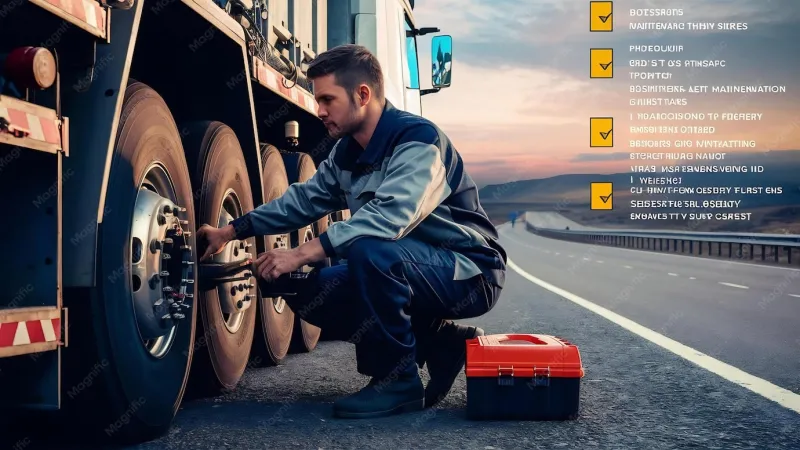
Photo: truck driver walkaround inspection checking tires semi truck morning, via img.freepik.com
Every commercial truck driver in America starts the day the same way: walking around their rig with a clipboard, checking things most of us haven't thought about since driver's ed — if ever. Tires. Lights. Couplings. Fluids. The whole thing takes about two minutes, and the federal government requires it. Pilots do a version of it too, of course. The pre-flight checklist is legendary — memorized by every aviation nerd, dramatized in every cockpit movie.
Here's the part almost nobody knows: airline pilots didn't invent that discipline. They refined it, borrowed from it, and in some cases learned it directly from trucking. And the version you could do on your own driveway takes about 90 seconds. It might be the cheapest insurance policy in motoring that nobody sells.
The Walkaround Was Born Out of Necessity
A trucker who blows a tire at 70,000 pounds doesn't get a roadside inconvenience. They get a potentially fatal crash, a torn-up trailer, and a federal investigation. So the industry built a culture around prevention. The pre-trip inspection, formalized in federal motor carrier regulations, exists because the math is brutal: a $5 tire pressure check versus a $30,000 accident.
Aviation arrived at the same place from a different direction. Early airmail pilots in the 1920s died frequently enough that the industry — and later the government — demanded a systematic check before every flight. When jet aircraft arrived with dozens of critical systems, the checklist became gospel. Some of the earliest commercial aviation safety manuals borrowed language and structure directly from freight and railroad operations, because those industries had already learned the hard way that human memory is a terrible safety device.
The shared DNA is obvious once you see it: both professions treat the walkaround as non-negotiable, and both discovered that most failures announce themselves in advance if you bother to look.
Why Your Brain Talks You Out of It
Here's the frustrating part. The checks work. So why does almost nobody outside a commercial cab or cockpit do them?
Psychologists call it the normalization of deviance — a term coined after the Challenger disaster. When you skip a check and nothing bad happens, your brain quietly files the check as unnecessary. Do that a few hundred times and the habit is gone. Your commute is short, your car is new-ish, and the last 500 trips went fine. The ritual feels pointless precisely because it's been working.
Truckers and pilots don't get that luxury. Their skip-a-day consequences are catastrophic, so the ritual survives. Yours just needs a smaller version.
The 90-Second Version
You don't need a clipboard or a federally mandated form. Once a week — or before any long drive — do this loop around your car:
Tires, 20 seconds. Walk past all four and glance at the sidewalls and tread. Look for anything bulging, cracking, or visibly low. A tire losing air slowly tells you before it fails catastrophically.
Lights, 15 seconds. With the ignition on, walk the perimeter: brake lights (press the pedal), turn signals, headlights. A dead brake light is a ticket and a rear-end collision risk. This one check alone pays for the ritual.
Fluids and glass, 20 seconds. Look under the car for new spots. Oil, coolant, brake fluid — anything dripping leaves a mark on the driveway that tells you weeks before a dashboard light does. Then glance at the windshield for chips spreading.
Wipers and washer fluid, 10 seconds. The cheapest item on the list, and the one that fails exactly when a semi is throwing slush at your windshield at 65 mph.
A quick load check, 10 seconds. Loose items in the cabin or bed become projectiles in a hard stop. Truckers call this cargo securement. You can just call it grabbing the coffee mug off the dash.
That's it. Under two minutes, no tools, no lift, no expertise.
What It's Actually Worth
Mechanics will tell you the most expensive repairs usually start as the cheapest problems. A slow coolant leak becomes a warped head. A worn wiper blade becomes an insurance claim. A soft tire becomes a blowout and a bent rim — or worse. Catching these on a driveway walkaround routinely saves drivers hundreds to thousands of dollars a year, which is why fleet managers insist on it: their accountants ran the numbers, and the walkaround wins every time.
There's a second, quieter benefit. Doing the loop changes how you relate to the car. You start noticing things — the way the tread looks, the sound at startup, the smell of something burning. That baseline awareness is exactly what the best drivers and pilots have in common. It's not paranoia. It's just attention, scheduled.
The truckers who taught aviation a thing or two about checklists weren't geniuses. They were just people who'd been burned enough to build a habit. Two minutes a week is a small price to borrow their scar tissue.