Meet the Volunteers Racing Against the Crusher to Save America's Automotive Soul
Meet the Volunteers Racing Against the Crusher to Save America's Automotive Soul
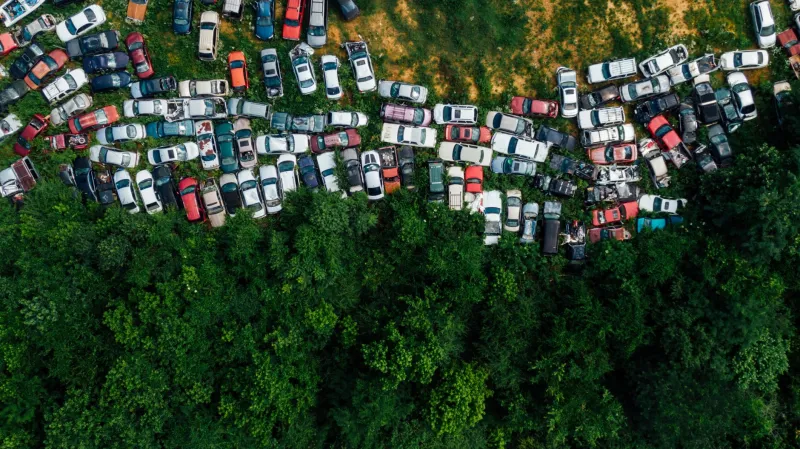
Somewhere in rural Ohio, a 1967 Oldsmobile Toronado sits in the third row of a salvage yard, slowly becoming part of the landscape. Its front-wheel-drive transaxle — a genuinely revolutionary piece of American engineering for its era — is mostly intact. Its trim tags are still readable. Its broadcast sheet, the factory document that lists every option the car was built with, is still tucked under the back seat cushion.
In six months, that car will probably be crushed. Its steel will be recycled. Its story will disappear.
Unless someone gets there first with a camera.
The Quiet Emergency Nobody Announced
America's salvage yards have always been a kind of industrial library — a physical record of what people drove, what broke, what got repaired, and what eventually got abandoned. For decades, that library was accessible to anyone willing to walk the rows with muddy boots and a parts list.
But the library is shrinking faster than most people realize. Scrap metal prices, land values, stricter environmental regulations, and the economics of the auto recycling industry have accelerated the pace at which yards are clearing inventory. Vehicles that might have sat for fifteen or twenty years in a quieter era are now being processed in three to five. The window for documentation — for preservation of any kind — has gotten dramatically narrower.
A loose, informal network of volunteers noticed this before most people did. They started showing up with cameras.
Who These People Actually Are
There's no official organization. No membership cards. No headquarters. What exists instead is a constellation of individuals — retired mechanics, amateur historians, car club members, photographers, and obsessive researchers — who share a specific, urgent goal: document what's there before it's gone.
Some operate through existing platforms. Forums like the Hamb (The Hokey Ass Message Board) and specialty Facebook groups dedicated to specific makes and models have become informal repositories for junkyard photography. Sites like JYsearch and various regional salvage directories get cross-referenced against field reports. When someone spots something significant, word travels fast in these communities.
Others have built their own archives. There are individuals sitting on tens of thousands of photographs organized by year, make, model, and location — personal databases that rival the holdings of some small automotive museums, except the museums don't know they exist.
What drives them isn't always nostalgia, though there's plenty of that. Many of these volunteers are motivated by something closer to a librarian's instinct: the conviction that information, once lost, is gone forever, and that the cost of preserving it is almost nothing compared to the cost of losing it.
What Gets Documented — and Why It Matters
The obvious value is parts location. A restorer hunting for a specific door handle, a correct-date-coded carburetor, or an undamaged dashboard pad for a vehicle that hasn't been in production for forty years has almost no other resource. Factory parts are long gone. Reproduction parts ranges have gaps. The only source is another car.
Junkyard documentation creates a searchable map of what still exists. A photograph of a partially stripped 1971 Plymouth 'Cuda taken in a Texas salvage yard might be the only record that the car's console trim — a piece nobody reproduces — was still intact as of last spring. That photograph, posted in the right community, can connect a restorer in New Hampshire with a yard in Texas they would never have found otherwise.
But the value goes deeper than parts matching.
Factory service manuals, for all their detail, documented how cars were supposed to be built. They didn't always document how they were actually built, or how the engineers and line workers improvised when a specification didn't survive contact with production reality. Physical vehicles — even deteriorating ones — carry that information in their metal.
Several restorers and engineers interviewed in automotive preservation circles have noted that junkyard examinations have revealed factory assembly details, wiring routing variations, and structural solutions that appear in no official documentation. When you're trying to correctly restore a vehicle or understand why a particular design decision was made, sometimes the only teacher left is the car itself.
The Methodology Behind the Mud
The more systematic volunteers approach junkyard documentation with something resembling archaeological discipline. A good documentation run covers exterior condition from all angles, VIN plates and trim tags photographed close enough to read, interior condition including any surviving paperwork, under-hood detail including casting dates on major components, undercarriage condition, and any unusual or non-standard features that might indicate a special order, a factory experiment, or a regional variant.
Broadcast sheets — the factory build documents that traveled with cars from the assembly line — are particular treasures. When found, they get photographed, transcribed, and cross-referenced against the vehicle's VIN. These documents can confirm options, reveal production anomalies, and occasionally surface information that contradicts what the collector community believed about a particular model's production numbers.
Some volunteers have developed relationships with salvage yard operators that give them advance notice before significant vehicles are processed. Others arrive unannounced and work quickly, knowing that the timeline is always uncertain.
The Digital Archive Nobody Officially Maintains
The uncomfortable reality of this movement is that its output is fragile in its own way. Photographs stored on personal hard drives, forum threads that disappear when hosting services fold, Facebook albums locked behind platform access — none of these are permanent solutions.
A handful of volunteers are aware of this problem and are trying to address it, creating redundant backups, exporting data to more stable formats, and in some cases donating materials to automotive museums and historical societies. But the effort is piecemeal and underfunded, relying entirely on individual initiative.
What this movement needs — and doesn't yet have — is the kind of institutional support that digitization projects in other historical fields have received. The Library of Congress has preservation programs for film, audio, and text. American automotive history, which is genuinely central to the country's industrial and cultural identity, has almost nothing equivalent for the physical vehicles quietly rusting in private yards.
A Race With No Finish Line
The volunteers who are doing this work aren't waiting for institutions to catch up. They're out there every weekend, walking the rows, getting their boots muddy, photographing door jamb stickers on cars that most people would walk past without a second glance.
They're not saving the cars. They can't. The economics of preservation mean that most of what sits in American salvage yards will eventually be recycled, and that's probably how it should be. Steel is a resource. Land is a resource. Not every vehicle can or should survive.
But the information can survive. The story of what was built, how it was built, and what it looked like at the end of its useful life — that can be saved, if someone gets there in time.
Somewhere in Ohio, a 1967 Toronado is waiting. The clock is running.